Start From Seed: The Beginner's Real-Talk Guide to Growing Organic Produce at Home
Let's be honest about something: those $4.99 organic herb clamshells at the grocery store are kind of a scam. You get a week's worth of basil, it wilts by Thursday, and you're back at the store the following weekend. Meanwhile, a packet of organic basil seeds costs about $3 and contains enough to grow basil all summer long — on a windowsill, if that's all you've got.
Growing your own produce from seed isn't a hobby reserved for people with half an acre and a Pinterest-worthy raised bed setup. It's a genuinely practical strategy for families who want cleaner food without the premium grocery bill. You just need to start with the right crops, skip the shortcuts that don't actually shortcut anything, and go in with realistic expectations.
Why Seeds Beat Nursery Starts (Most of the Time)
Walk into any garden center in April and you'll find rows of seedling starts — tomatoes, peppers, herbs, squash — ready to go in the ground. They're convenient, and they're tempting. They're also frequently grown with synthetic fertilizers and pesticide drenches that you'd never use in your own garden.
The nursery industry isn't heavily regulated for organic inputs at the seedling stage. A plant can be sold as "ready for organic gardens" without the seedling itself having been grown organically. Unless you're buying certified organic starts — which exist but are harder to find and cost significantly more — you don't know what that little plant was fed for the first six weeks of its life.
Starting from certified organic seed sidesteps this entirely. You control the growing medium, the water, and the inputs from day one. That's what clean growing actually looks like.
The Crops That Actually Make Sense to Grow From Seed
Not everything is worth the effort of starting from scratch. Here's a practical breakdown:
High-value, easy wins:
- Lettuce and salad greens — Stupidly easy to grow, incredibly expensive to buy organic. A single packet of mixed greens seed ($3-4) can produce $40+ worth of salad over a season if you practice cut-and-come-again harvesting.
- Herbs (basil, cilantro, dill, parsley) — Direct-sow into pots or garden beds. These are the highest cost-per-ounce items at the store and among the simplest to grow.
- Radishes — Ready in 25-30 days, no special equipment needed. Great confidence-builders for beginners.
- Kale and chard — Highly productive, cold-tolerant, and consistently pricey at organic retailers.
- Bush beans and snap peas — Direct sow, no transplanting, minimal fuss. Both produce heavily relative to the space they take.
Worth it with a little more effort:
- Tomatoes — The gold standard of home growing. Starting from seed instead of buying a nursery start saves $3-5 per plant, and with 4-6 plants you're looking at real savings.
- Cucumbers and zucchini — Fast growers that produce abundantly. One or two plants is genuinely enough.
When buying starts makes more sense:
- Peppers and eggplant require a long, warm growing season and benefit from an early head start that's tricky to manage indoors without grow lights. If you can find certified organic starts, buy them.
- Perennial herbs like rosemary and thyme are cheaper to buy as established plants once and let them grow for years.
What You Actually Need to Get Started
You do not need a greenhouse. You do not need a grow tent. Here's the real minimum:
- Organic seed packets from reputable sources (look for USDA Organic or the Safe Seed Pledge on the packet)
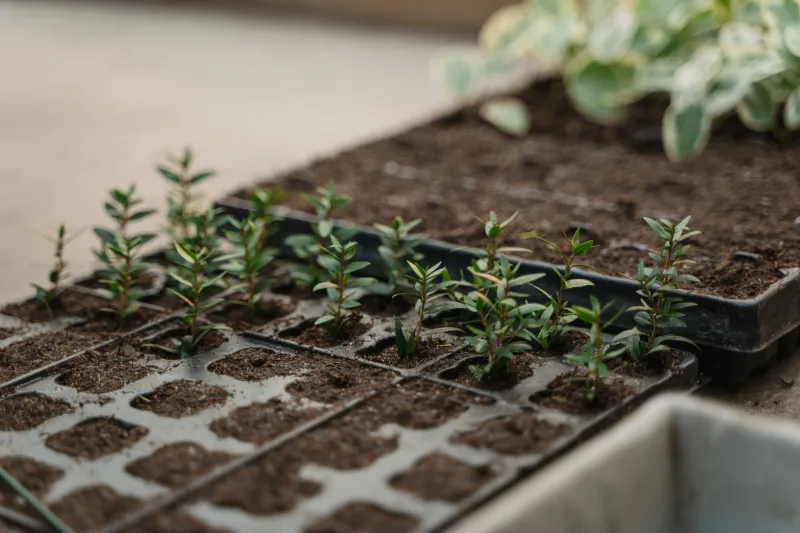
- Seed-starting mix — not regular potting soil, which is too dense for germination
- Small containers — repurposed yogurt cups, egg cartons, or cheap cell trays all work
- A sunny south-facing window or an inexpensive LED grow light strip ($25-40) if your windows are weak
- A spray bottle for gentle watering without disturbing tiny seedlings
Total startup cost for a basic indoor seed-starting setup: $30-60. That's a one-time investment that pays for itself in the first season.
A Simple Seasonal Planting Calendar (US-Focused)
Timing is where most beginners go wrong. Here's a simplified framework:
6-8 weeks before your last frost date (typically January-March in most of the US): Start tomatoes, peppers, and eggplant indoors.
4 weeks before last frost: Start kale, chard, lettuce, and herbs indoors. These tolerate cooler temps and can go outside earlier.
On or after last frost date: Direct sow beans, peas, cucumbers, squash, radishes, and most herbs directly into garden beds or containers.
Fall (6-8 weeks before first frost): Direct sow a second round of lettuce, kale, spinach, and radishes for a fall harvest.
Not sure of your frost dates? The Old Farmer's Almanac has a free frost date lookup tool by zip code — it takes 30 seconds and removes all the guesswork.
The Honest Cost Comparison
Let's run some real numbers. Organic cherry tomatoes at a typical US grocery store run $4-6 per pint. A healthy tomato plant in a good season produces 10-15 pounds of fruit. At $5/pint (roughly half a pound), that's $100-150 worth of tomatoes from a single plant that cost you $0.25 in seed and maybe $5 in soil and a pot.
Organic basil: $3-4 per small bunch at the store. A $3 seed packet, direct-sown into a 6-inch pot, produces continuous harvests for 3-4 months.
Organic salad mix: $5-7 per 5oz container. A $4 seed packet sown in a window box gives you 8-10 cuts over the season.
The math is not subtle. For the crops that work, home seed-starting is one of the highest-return things a budget-conscious organic household can do.
When DIY Growing Doesn't Save You Money
Fair warning: some vegetables aren't worth the hassle for most people. Corn needs a lot of space to pollinate properly. Broccoli and cauliflower are fussy and slow. Melons require significant heat and room to sprawl. If you're working with a small patio or a few containers, focus your energy on the high-value, high-yield crops above and keep buying the rest.
The goal isn't to grow everything. It's to grow the things that save you the most money and give you the cleanest possible food — and to do it in a way that actually fits your life.
One Last Thing
There's something that happens when you grow food from seed that's hard to put a dollar value on. You know exactly what went into it. No mystery inputs, no supply chain, no packaging. Just soil, water, light, and time. For anyone trying to live a little more intentionally around what they eat, that's not a small thing.
Start with one pot of basil. Or a window box of lettuce. See how it feels. Chances are, you'll be planning next year's garden before the season's even over.