Regenerative Is the New Organic — But the Label Is Still Making Up the Rules
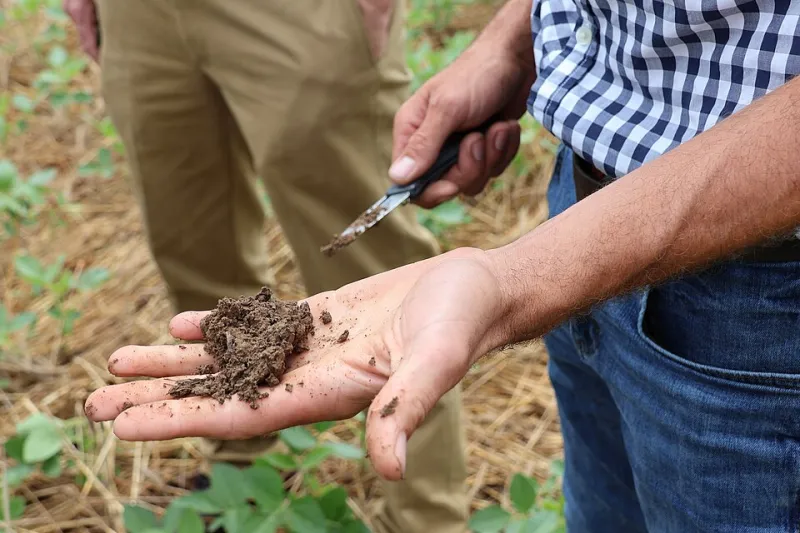
Photo: USDAgov, Public domain, via Wikimedia Commons
Somewhere in the last few years, 'regenerative' jumped from a word used at soil conferences to a word printed on packages of ground beef, butter, oats, and dog treats. It sounds like the next step up from organic — more holistic, more ambitious, more 2026.
The trouble is that unlike organic, regenerative has no federal definition, no shared rulebook, and no single enforcement mechanism. What it has instead is a handful of competing certification programs, a lot of corporate sustainability reports, and a shopper standing in a refrigerated aisle trying to figure out whether any of it means anything.
Here's the honest lay of the land.
A word with no landlord
The USDA owns the word 'organic.' It defines it, regulates it, and enforces it, which is why organic eggs and organic almonds are playing by the same rulebook. Nobody owns 'regenerative.' The USDA has not defined it. There is no legal threshold for using it on a package in the US, which means a company can print it based on whatever internal program it invented last quarter, and the main risk it faces is a false-advertising complaint.
That gap is exactly why a pile of private certification programs rushed in. Many of them are serious, well-designed, and genuinely useful. But it also means the label on the package is only as strong as the program behind it — and those programs are not equivalent.
Three labels, three different promises
A quick field guide to what's actually appearing on shelves:
Regenerative Organic Certified (ROC). The strictest of the bunch on paper. It's built on top of USDA organic — you can't get ROC without being certified organic first — and layers on soil health, animal welfare, and farmworker fairness requirements. It has real audit infrastructure and covers the whole operation, not one ingredient in a blend.
Certified Regenerative by A Greener World. A different philosophy: it doesn't require an organic base, which lets conventional farms start down the path. It scores producers against a rubric covering soil, water, and biodiversity, with a baseline-and-improvement model rather than a pass/fail gate.
Regenified and similar verification marks. These are verification programs rather than full certifications, often with tiered levels and a heavier reliance on self-reported practice data plus spot checks. Useful, but a different animal from a full certification.
Then there's the uncertified layer: in-house 'regenerative' programs from food companies and restaurant chains, sometimes tied to a named supplier partnership and sometimes to nothing you can look up.
What 'soil carbon' actually means at the farm level
Strip away the marketing and most regenerative claims rest on a short list of practices: cover crops, reduced tillage, diverse rotations, rotational grazing, compost applications. All of those are real, well-studied, and genuinely good for soil in most contexts.
The leap that gets made is from good practice to measurable carbon outcome. That leap is where things get shaky. A farm that plants cover crops is doing a good thing even if its soil carbon doesn't budge for a decade. And soil carbon is slow, noisy, and site-specific — a clay field and a sandy field under identical management will tell different stories.
The measurement problem nobody prints on the package
Soil carbon is expensive to measure properly. You core, you sample at depth, you replicate, you account for bulk density, and then you do it all again next year. Because that's costly, a lot of programs rely on models instead — plug in the practices and the model estimates tons of carbon stored.
That isn't fraud, but it does mean two products with the same 'regenerative' word on the box could be backed by wildly different levels of evidence. And practice-based programs pay farmers for doing things; outcome-based programs pay for measured results. Those are not the same promise, and the packaging rarely tells you which one you bought.
The label-versus-reality gap
A few questions worth asking of any regenerative claim:
- Does it cover the whole product, or one ingredient in a blend?
- Is the certifier named anywhere on the package, or is it the brand's own program?
- If it's beef or dairy, does the animal welfare piece come with a pasture requirement, or is it just feed and tillage?
- Does the brand publish outcomes — soil tests, third-party verification reports — or only practice-adoption stats?
If the answers aren't on the package or the brand's site within about two clicks, that's information too.
How to tell substance from marketing in 2026
- Look for a certifier logo, not just a word. ROC, AGW, and similar marks are searchable and auditable. A bare adjective is not.
- Check the organic base. If a product is both organic and regenerative-certified, the organic piece is the part with legal teeth. That's your floor, not your ceiling.
- Treat the word on ultra-processed products with extra suspicion. The claim applies to an ingredient supply chain, and a lot can happen between the field and the box.
- Prefer brands that publish numbers. Outcome data, farm lists, and third-party verification reports are the tell.
- Don't pay a huge premium for the word alone. Regenerative price bumps vary wildly and don't track certification rigor.
The takeaway
Regenerative agriculture is a real and worthwhile direction, and some of the programs behind these labels are doing serious work in the field. But right now the word is a bucket, not a standard — and a bucket will hold whatever a brand pours into it. Buy the certification, not the adjective.