Plastic in Every Bite? How to Choose Packaging That's as Clean as the Food Inside
You read ingredient labels. You choose certified organic. You've probably even started filtering your tap water. But here's the uncomfortable truth that doesn't make it onto most food blogs: the packaging your organic granola, nut butter, or cold-pressed juice comes in could be quietly undoing some of that effort.
Microplastics — tiny plastic fragments less than 5 millimeters wide, often invisible to the naked eye — are now being detected in human blood, breast milk, lung tissue, and even placentas. A 2022 study published in Environment International found microplastic particles in the blood of 77% of participants tested. More recently, researchers have flagged nanoplastics (an even smaller category) as potentially crossing the blood-brain barrier. This isn't fringe science anymore. It's a mainstream health concern that's moving fast.
And the kitchen? It's ground zero.
How Microplastics Get Into Your Food in the First Place
The most obvious culprit is plastic packaging itself. When food — especially anything acidic, oily, or heated — comes into contact with plastic containers, it can absorb microscopic particles that leach from the material. Think about that olive oil in a plastic bottle sitting in a warm pantry, or the plastic wrap pressed directly against your cheese.
But it doesn't stop there. Plastic cutting boards shed particles every time you run a knife across them. Nonstick cookware with scratched coatings can release microplastics directly into your food as it cooks. Even teabags — yes, including some sold as "natural" — are often made with polypropylene mesh that releases billions of microplastic particles per cup.
For health-conscious shoppers, this creates a frustrating paradox. You can buy the most pristine, certified organic apple on the market, and then store it in a plastic bag, cut it on a plastic board, and pack it in a plastic container — introducing synthetic contaminants at every step.
Why Organic Certification Doesn't Cover Packaging
This is the gap that a lot of brands and certifiers aren't talking about loudly enough. USDA Organic certification governs how food is grown and processed — it says nothing about how it's packaged. That means a product can carry the USDA Organic seal and still arrive in multi-layer plastic film, polystyrene trays, or shrink-wrapped plastic.
For consumers who've come to rely on the organic label as a shorthand for "clean," this is a real blind spot. Clean living doesn't stop at the farm gate. It extends all the way to your pantry shelf.
What Plastic-Free and Compostable Actually Mean
Before we get into specific brands worth knowing, it helps to understand the terminology — because greenwashing is absolutely a thing in the packaging world too.
- Plastic-free means the packaging contains no plastic polymers. This includes glass, metal tins, paper, and uncoated cardboard.
- Compostable means the material breaks down into non-toxic components under composting conditions. Look for certifications like BPI (Biodegradable Products Institute) or TÜV Austria OK Compost to confirm it's legit — not just a marketing claim.
- Biodegradable is the vaguest of the three and has no regulated standard in the US. Without a certification, it's essentially meaningless.
- Recyclable doesn't mean plastic-free. Most plastic packaging is technically recyclable, but only a fraction actually gets recycled in US municipal systems.
Brands We Love for Going Beyond the Label
At Purely Organics, we've been paying close attention to which brands treat packaging as part of their clean-living commitment — not an afterthought.
Farmhouse Culture ships their probiotic krauts and gut shots in glass jars with metal lids. No plastic contact with the food, period. The glass is infinitely recyclable and doesn't leach anything, ever.
Once Again Nut Butter offers several of their organic almond and peanut butters in glass jars, and their paper-pouch single-serve packets are BPI-certified compostable. It's one of the few nut butter brands making a real dent in plastic waste at scale.
Alter Eco has been a quiet leader here for years. Their organic chocolate bars use compostable wrappers certified to break down in home compost bins — not just industrial facilities. They also publish annual impact reports documenting their progress.
Thrive Market's private-label dry goods (available through select organic retailers) have been transitioning to kraft paper bags with compostable inner liners for items like quinoa, lentils, and oats. It's a model more brands should be following.
Purely Organics tip: When you shop with us, look for the packaging call-outs on each product page. We've started flagging items that come in glass, metal, or certified compostable packaging so you can filter your choices without having to dig through fine print.
Simple Swaps You Can Make in Your Kitchen Right Now
Brand choices matter, but so do the everyday habits happening in your kitchen.
- Switch to a wood or bamboo cutting board. Both shed far fewer particles than plastic boards and are naturally antimicrobial when maintained properly.
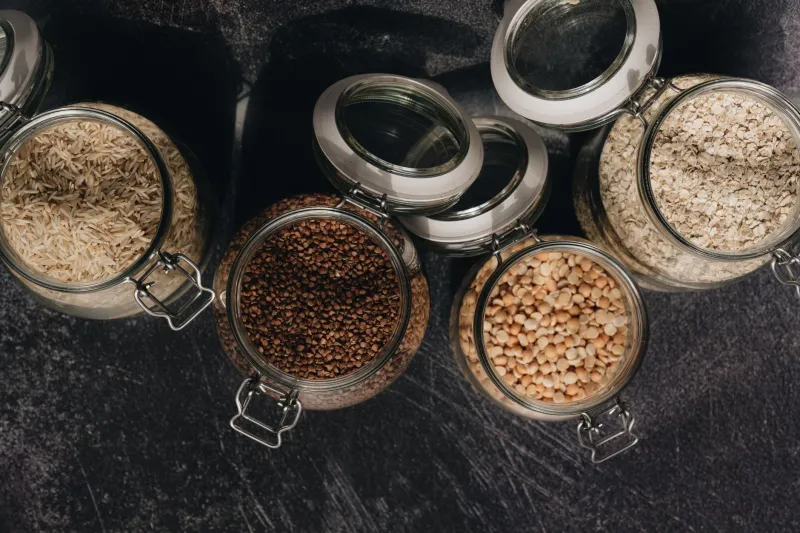
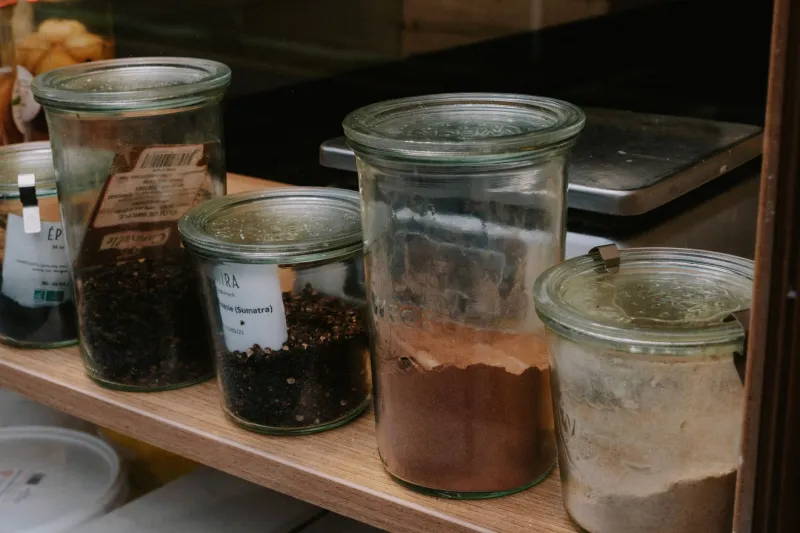
- Store leftovers in glass or stainless steel containers. Mason jars are cheap, widely available, and last for decades.
- Ditch the plastic wrap. Beeswax wraps (like those from Bee's Wrap) are a great reusable alternative for covering bowls or wrapping produce.
- Rethink your kettle and teabags. Loose-leaf tea brewed in a stainless steel infuser is both plastic-free and often higher quality.
- Be skeptical of "natural" plastic alternatives. PLA (polylactic acid) plastics look like plastic and behave like plastic at room temperature — they're compostable only under very specific industrial conditions.
The Bottom Line
Clean eating has always been about what goes into your body. But the microplastics conversation is forcing a broader reckoning: clean living also has to account for what your food touches before it reaches your plate. Choosing organic is a powerful first step. Choosing organic with plastic-free or compostable packaging? That's the full picture.
At Purely Organics, we believe that "naturally delivered" means more than just dropping a box on your doorstep. It means thinking through every point of contact between your food and synthetic materials — and giving you the tools to make genuinely informed choices. Keep an eye on our product pages for packaging transparency updates, because this is a conversation we're not done having.