Tiny Bugs, Big Problems: How What You Eat Is Quietly Reshaping Your Gut
You've probably heard the phrase "you are what you eat." But here's a more accurate version: you are what your gut bacteria eat. Inside your digestive tract right now, there are somewhere between 38 and 100 trillion microorganisms — bacteria, fungi, viruses, and more — collectively known as your microbiome. These tiny residents help digest your food, regulate your immune system, produce vitamins, and even send signals to your brain.
And a growing body of research suggests we've been slowly starving and poisoning them for decades — not through dramatic dietary disasters, but through the quiet, cumulative effects of everyday conventional foods.
What Makes a Healthy Microbiome, Anyway?
Microbial diversity is the name of the game. A gut teeming with hundreds of different bacterial species is far more resilient than one dominated by just a handful. Think of it like an ecosystem: the more varied the species, the more stable the whole thing becomes.
When diversity drops — a state researchers call dysbiosis — things start going sideways. Inflammation increases. Digestion gets sluggish. The gut lining, which is supposed to be a selective barrier, can become permeable (you may have heard this called "leaky gut"). Studies have linked low microbial diversity to conditions ranging from irritable bowel syndrome and allergies to anxiety, obesity, and autoimmune disorders.
So what's causing this diversity crash? Turns out, a lot of it comes down to what's on — and in — your food.
The Chemicals Your Gut Bacteria Didn't Sign Up For
Conventional agriculture depends heavily on pesticides to keep crop yields high. That's not exactly a secret. But what doesn't get nearly enough airtime is the effect those pesticides have once they make it past your lips.
Glyphosate — the active ingredient in Roundup and one of the most widely used herbicides in the US — has attracted particular attention from microbiome researchers. A 2022 study published in Environmental Health Perspectives found that glyphosate disrupts the shikimate pathway, a biochemical route that many beneficial gut bacteria rely on to function. Human cells don't use this pathway, which is why glyphosate was long assumed to be harmless to us. But our gut bacteria? Different story.
Organophosphate pesticides (found on conventionally grown strawberries, spinach, and peaches — perennial fixtures on the Environmental Working Group's Dirty Dozen list) have also been shown to reduce populations of Lactobacillus and Bifidobacterium, two of the most studied beneficial bacterial genera. These are the same strains you'll find marketed in probiotic supplements.
In other words: you could be spending money on probiotics while simultaneously eating foods that kill off exactly what you're trying to grow.
Artificial Additives: The Gut Disruptors in Plain Sight
Pesticide residue gets most of the attention, but artificial additives are doing their own damage. Emulsifiers like carboxymethylcellulose and polysorbate 80 — common in processed foods like salad dressings, ice cream, and packaged baked goods — have been shown in animal studies to alter the mucus layer lining the gut, allowing bacteria to get closer to intestinal cells than they should. The result? Chronic low-grade inflammation.
Artificial sweeteners are another concern. Sucralose, saccharin, and aspartame have all been studied for their effects on gut bacteria, with several studies suggesting they reduce microbial diversity and alter metabolic function. A 2022 clinical trial out of Israel found that even short-term consumption of saccharin and sucralose significantly changed participants' gut microbiome composition.
The irony is that many of these additives show up in foods marketed as "diet," "light," or even "natural" — which is exactly why reading labels matters more than trusting front-of-package claims.
The Organic Advantage Isn't Just About What's Added — It's About What's Left Out
Here's where organic food earns its reputation in a way that goes beyond marketing. Certified organic produce is grown without synthetic pesticides, herbicides, or fertilizers. Organic processed foods are made without the artificial preservatives, colors, and emulsifiers that populate conventional ingredient lists.
That means when you eat organic, you're not just getting cleaner ingredients — you're removing a steady stream of microbiome disruptors from your daily diet.
Research backs this up. A 2019 study in JAMA Internal Medicine found that people who ate more organic food had significantly lower pesticide metabolite levels in their urine. And while direct studies linking organic consumption to improved microbiome diversity are still emerging (this is a young field), the mechanistic logic is solid: fewer gut-disrupting chemicals means a better environment for beneficial bacteria to thrive.
Which Organic Swaps Have the Biggest Gut Impact?
Not every swap carries equal weight. If you're working with a budget or just starting out, here's where to focus first:
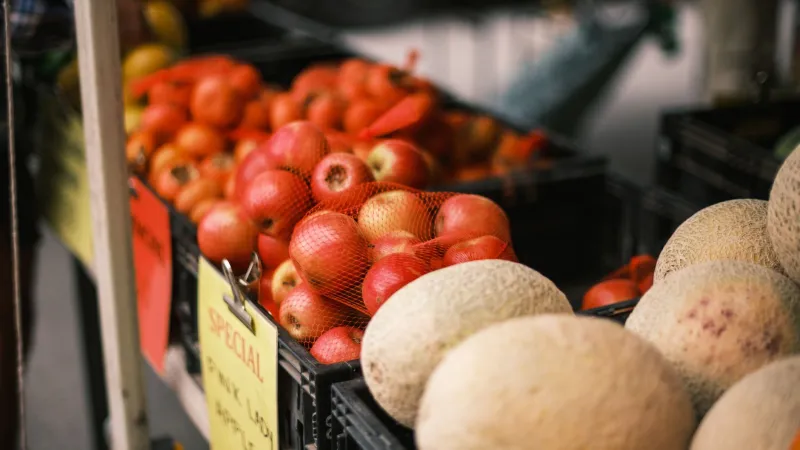
1. Strawberries, spinach, and apples. These top the EWG Dirty Dozen year after year, meaning they carry the heaviest pesticide loads when conventionally grown. Going organic on these three alone meaningfully reduces your exposure.
2. Oats. Glyphosate is commonly used as a pre-harvest desiccant on conventional oats, and testing has repeatedly found residues in popular oat-based products. Organic oats sidestep this entirely.
3. Processed snack foods. Swap conventional crackers, cookies, and chips for organic versions — or better yet, whole-food alternatives. This cuts out both pesticide residues from conventional grains and the emulsifiers and artificial additives that disrupt your gut lining.
4. Fermented foods. Organic yogurt, kefir, kimchi, and sauerkraut don't just avoid gut disruptors — they actively introduce beneficial bacteria. Conventional versions often contain added sugars and preservatives that counteract any probiotic benefit.
Feeding Your Microbiome, Not Just Avoiding Harm
Removing disruptors is step one. But your gut bacteria also need to eat, and their favorite food is fiber — specifically the prebiotic kind found in garlic, onions, leeks, asparagus, bananas, and legumes. A diet rich in organic whole foods naturally delivers both the fiber your microbiome craves and the clean growing conditions that let it diversify.
The microbiome revolution is still unfolding. Researchers are discovering new connections between gut health and brain function, immunity, skin conditions, and metabolic health almost every month. But one thing is increasingly clear: what you're not eating — the synthetic pesticides, the artificial emulsifiers, the chemical preservatives — may matter just as much as what you are.
Your gut bacteria have been quietly doing their jobs for your entire life. The least we can do is stop making their environment hostile.